Florida homeowners often choose metal roofing because of its durability, longevity, and ability to withstand the state’s demanding weather conditions. But there is one question that comes up frequently during Florida’s thunderstorm season:
Does having a metal roof make your home more likely to be struck by lightning?
The simple answer is no. A metal roof does not attract lightning.
However, that doesn’t mean a home with a metal roof cannot be struck by lightning—or that lightning protection isn’t worth considering. Understanding the difference between roofing material and a properly designed lightning protection system is especially important for homeowners in a state where thunderstorms are a regular part of life.
Do Metal Roofs Attract Lightning?
One of the most common misconceptions about metal roofs is that because metal conducts electricity, it somehow attracts lightning.
That’s not how lightning works.
The likelihood of a structure being struck is influenced by factors such as its height, location, surrounding terrain, and exposure—not simply whether the roof is made from metal, asphalt shingles, tile, or another material.
Metal is electrically conductive, but being conductive is not the same thing as attracting lightning.
A house with an asphalt shingle roof can be struck by lightning just as a house with a metal roof can.
What Happens If Lightning Strikes a Metal Roof?
Although a metal roof doesn’t attract lightning, homeowners may understandably wonder what happens if lightning actually strikes one.
Lightning carries an enormous amount of electrical energy. Without a properly designed path to ground, that energy can travel through different conductive components of a building as it attempts to reach the earth.
Depending on the structure, potential paths can involve electrical wiring, plumbing, HVAC equipment, metal framing and other building components.
This is where the distinction between a metal roof and a lightning protection system becomes important.
A metal roof by itself should not be assumed to function as a complete lightning protection system.
Isn’t the Metal Roof Already Grounded?
This is another question we frequently hear.
A homeowner may look at an entire roof covered in metal and reasonably assume that it provides lightning protection.
But a complete lightning protection system is specifically designed to intercept a lightning strike, conduct the electrical current along predetermined paths and safely disperse that energy into the earth.
Depending on the structure and system design, lightning protection can incorporate components such as:
- Air terminals
- Main conductors
- Grounding electrodes
- Bonding connections
- Appropriate connectors and fittings
- Surge protective devices
These components work together as a system.
Simply having metal roofing does not automatically mean the building has the necessary strike termination, bonding, conductor and grounding components of a professionally designed lightning protection system.
Can Lightning Rods Be Installed on a Metal Roof?
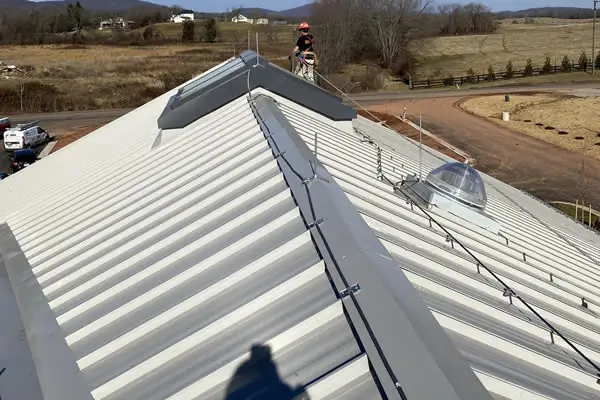
Yes. Lightning protection systems can be designed for homes and buildings with metal roofing.
In fact, experienced lightning protection installers regularly work with standing-seam metal roofs and other types of metal roofing systems.
The installation approach depends on the particular roof and building.
A professional installer will consider the roof configuration, building dimensions, roof penetrations, metal components, electrical systems, grounding conditions and other characteristics of the property when designing the system.
The goal is not simply to put lightning rods on top of the building. Every component must work together to create an effective path for lightning current.
Will Lightning Rods Damage My Metal Roof?
A properly planned installation takes the roofing system into consideration.
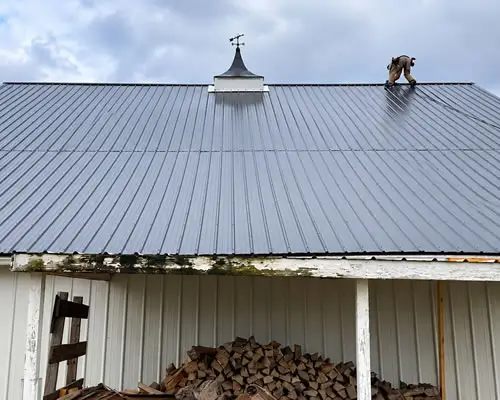
Metal roofs come in different configurations, including standing-seam panels, exposed-fastener systems and other designs. The attachment method used for lightning protection should therefore be appropriate for the particular roof.
This is one reason homeowners should avoid treating lightning protection as a do-it-yourself roofing project.
An experienced lightning protection contractor can determine how the system should be installed while taking both the lightning protection requirements and the roof construction into account.
Why Lightning Protection Matters in Florida
Florida’s frequent thunderstorms make lightning a familiar concern for homeowners throughout the state.
A lightning strike doesn’t have to result in catastrophic structural damage to become expensive.
Lightning-related electrical energy can potentially affect:
- Electrical wiring
- HVAC systems
- Televisions and computers
- Appliances
- Security systems
- Smart-home equipment
- Pool and spa equipment
- Garage door systems
- Irrigation controllers
- Internet and communications equipment
- Other sensitive electronics
Modern homes contain significantly more electronic equipment than homes did decades ago, which makes a comprehensive approach to lightning and surge protection worth considering.
Lightning Protection and Surge Protection Are Not the Same Thing
Homeowners frequently ask whether installing a whole-house surge protector means they don’t need lightning protection.
The two systems serve different purposes.
A structural lightning protection system is designed to intercept a direct lightning strike and provide a controlled path for lightning current toward the ground.
Surge protection is designed to help protect electrical and electronic equipment from damaging voltage surges.
For comprehensive protection, these measures can complement one another rather than serving as substitutes.
This distinction is particularly important for modern Florida homes containing expensive appliances, HVAC equipment, entertainment systems, computers, pool equipment and smart-home technology.
What Does a Lightning Protection System Do?
A properly designed lightning protection system doesn’t prevent thunderstorms, repel lightning or guarantee that lightning will never strike a building.
Instead, the system is designed to manage what happens if the structure is struck.
Air terminals positioned according to the system design provide strike termination points. Conductors provide paths for lightning current to travel toward the grounding system.
Bonding helps address potentially dangerous differences in electrical potential between conductive building components.
The grounding system then helps disperse the lightning current into the earth.
It’s the complete system—not an individual lightning rod—that provides the protection.
Does Lightning Protection Make Sense for a New Metal-Roof Home?
If you’re building a new home in Florida, construction can be an excellent time to consider lightning protection.
Planning the system during construction may make it easier to coordinate conductor routing, grounding, bonding and other components with the builder, electrician, roofer and other trades.
It can also allow some lightning protection components to be incorporated less conspicuously into the finished structure.
However, that doesn’t mean an existing home is too late.
Lightning protection systems can also be retrofitted to existing homes, including homes with metal roofs.
What About Barns and Metal Buildings?
Metal-roof lightning protection isn’t limited to residential homes.
Florida has many barns, agricultural structures, workshops, warehouses, garages and commercial buildings that use metal roofing.
These structures may contain equipment, electrical systems, vehicles, machinery, livestock or valuable inventory.
A lightning protection professional can evaluate the building and determine an appropriate system based on the structure’s particular design and use.
Does a Taller Home Have a Greater Lightning Risk?
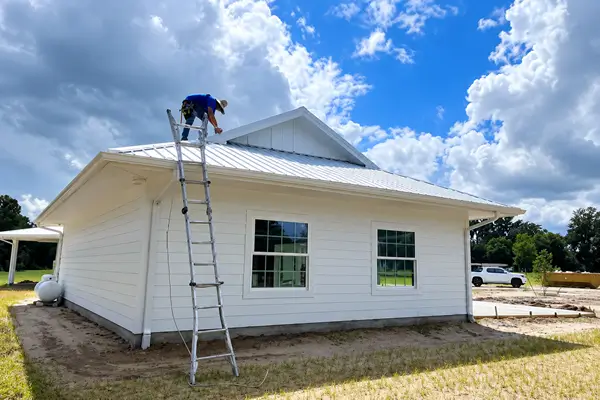
The height and exposure of a structure are among the factors that can influence lightning strike risk.
For example, a taller home standing relatively isolated in an open area may have a different exposure profile than a low building surrounded by taller structures.
But there isn’t one simple rule that determines which house will be struck.
Lightning is unpredictable, which is precisely why protection systems are designed around providing a controlled path if a strike occurs rather than attempting to predict exactly where lightning will strike.
Can an Existing Lightning Protection System Be Used After a Roof Replacement?
If your home already has lightning protection and you’re replacing the roof, the lightning protection system deserves attention during the project.
Roofing work may require portions of the system to be temporarily removed, relocated or disconnected.
After the roofing project is completed, the lightning protection system should be properly restored and evaluated to make sure its components and connections remain intact.
Don’t assume that a system is functioning correctly simply because the visible lightning rods were placed back on the roof.
The conductors, connections, bonding and grounding are all important parts of the complete system.
When Should a Lightning Protection System Be Inspected?
An inspection may be appropriate when:
- You’ve recently purchased a home with an existing system
- The roof has been replaced
- The home has undergone major renovations
- An addition has been constructed
- Solar panels have been installed
- New rooftop equipment has been added
- The property has experienced a significant lightning event
- System components appear loose or damaged
- You don’t know when the system was last inspected
Changes to a building can affect an existing lightning protection system, even when the changes seem unrelated.
How Do I Know If My Metal-Roof Home Needs Lightning Protection?
Every property is different.
The decision can depend on the home’s size, height, location, construction, surrounding environment and the value or sensitivity of the systems and equipment inside it.
Rather than assuming that a metal roof either increases your risk or protects you from lightning, the better approach is to have the property evaluated as a complete structure.
A professional assessment can determine what type of lightning protection system is appropriate for the building.
Professional Lightning Protection for Metal Roofs in Florida
A metal roof can be an excellent choice for a Florida home, but metal roofing itself should not be confused with a complete lightning protection system.
The roof doesn’t attract lightning, nor does it automatically provide all of the components necessary to safely manage a direct strike.
Elite Lightning Rods provides professional lightning protection services for residential, commercial and other structures throughout Florida. With four generations of industry experience and more than 60 years in the lightning protection field, our team provides system design, installation, inspections, maintenance, repairs and retrofit solutions.
If you have a metal roof—or you’re planning to install one—Elite Lightning Rods can evaluate your property and help determine an appropriate lightning protection solution for your structure.
FAQs
Does a metal roof increase the chance of being struck by lightning?
No. Metal roofing does not attract lightning. Factors such as a building’s location, height and exposure are more relevant to whether a structure may experience a strike.
Are lightning rods necessary on a metal roof?
A metal roof alone isn’t the same as a complete lightning protection system. Whether lightning protection is appropriate should be determined based on the individual building and its exposure.
Can lightning rods be installed without damaging a metal roof?
Lightning protection systems can be designed for metal roofs using installation methods appropriate for the particular roofing system.
Does a whole-house surge protector protect against a direct lightning strike?
Surge protection and structural lightning protection perform different functions. Surge protective devices help protect electrical equipment from transient voltage surges, while a structural lightning protection system is designed to manage lightning current from a direct strike.
Can lightning protection be added after my metal roof is already installed?
Yes. Existing homes and buildings can be evaluated for retrofit lightning protection systems.