Florida homeowners are accustomed to preparing their properties for intense weather. Roof maintenance, hurricane preparation, drainage, and surge protection often receive plenty of attention, but one area that can sometimes be overlooked is protection from lightning.
A lightning protection system is designed to provide a controlled path for lightning current to travel toward the ground. Rather than being a single lightning rod installed on the roof, a properly designed system incorporates multiple components that work together to help protect the structure.
For Florida homeowners, understanding how these systems work can make it easier to determine whether lightning protection should be considered for a new or existing home.
Why Lightning Protection Matters for Florida Homes
Thunderstorms are a familiar part of life in Florida, especially during the warmer months. Lightning can occur during storms even when the heaviest rain appears to be some distance away.
A direct lightning strike can involve an enormous amount of electrical energy. When a structure does not have a designated lightning protection system, that energy may travel through conductive components of the building as it seeks a path toward ground.
A professionally designed lightning protection system is intended to intercept a strike and provide a controlled route for the lightning current to reach the earth.
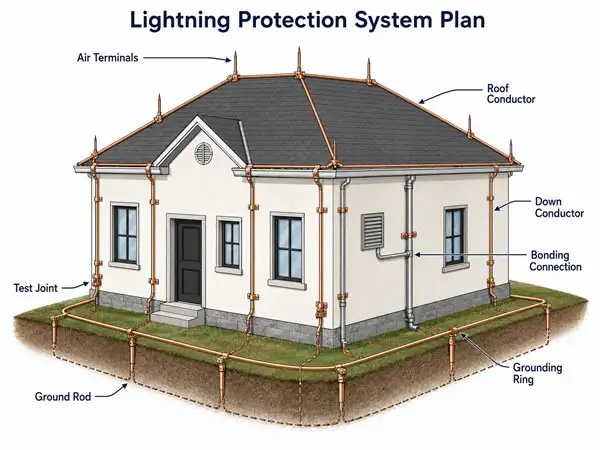
What Is Included in a Residential Lightning Protection System?
Many people still think of lightning protection as simply installing several metal rods along a roof. Those air terminals are important, but they are only one part of a complete system.
Depending on the home and system design, lightning protection may include:
- Air terminals or lightning rods
- Conductors
- Grounding electrodes
- Bonding of appropriate metallic systems
- Connections between system components
- Surge protective devices
These components must work together. Proper design, installation, grounding, and bonding are essential parts of an effective lightning protection system.
Does Every Florida Home Need the Same System?
No. Lightning protection should be designed for the individual structure.
A large two-story home may require a different system layout than a smaller single-story residence. Roof shape, chimneys, additions, construction materials, nearby structures, electrical services, and grounding conditions can also influence system design.
This is why lightning protection should not be approached as a one-size-fits-all installation.
An experienced lightning protection contractor can evaluate the property and determine how a system should be configured for the structure.
Can Lightning Protection Be Installed on an Existing Home?
Yes. Lightning protection systems can be installed on both new and existing homes.
Homeowners sometimes assume lightning protection must be incorporated during construction, but systems can often be retrofitted to existing properties.
This can be particularly useful when a homeowner is:
- Replacing a roof
- Renovating or expanding a home
- Purchasing an older property
- Adding new electrical or mechanical equipment
- Evaluating an older lightning protection system
When installing a system on an existing home, careful planning can also help minimize the visual impact of conductors and other components.
What About Homes with Metal Roofs?
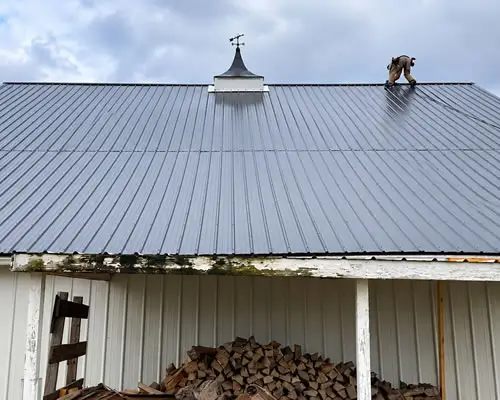
A metal roof does not automatically eliminate the need to evaluate lightning protection.
Although metal is conductive, the purpose of a lightning protection system is to create an intentionally designed route for lightning current from the strike point to ground.
Homes with metal roofs should therefore be evaluated based on the entire structure rather than simply the roofing material.
A professional installer can determine how the roof, conductors, grounding, bonding, and other building components should be incorporated into the system design.
Lightning Protection and Surge Protection Serve Different Purposes
Another common misconception is that whole-house surge protection and structural lightning protection are interchangeable.
They aren’t.
A lightning protection system is designed to intercept a lightning strike and provide a path for the lightning current toward ground.
Surge protection is designed to help protect electrical and electronic systems from transient overvoltages.
For homeowners with televisions, computers, appliances, security systems, HVAC equipment, smart-home technology, and other electronics, surge protection can be an important part of an overall protection strategy.
However, surge protection alone is not a substitute for a properly designed structural lightning protection system.
What If Your Home Already Has Lightning Rods?
If you’ve purchased a home that already has lightning rods, don’t automatically assume the system is complete or currently performing as intended.
Older systems may have been altered during:
- Roof replacements
- Remodeling projects
- Home additions
- Electrical upgrades
- HVAC installations
- Solar installations
- Exterior renovations
Connections can also deteriorate or become disconnected over time.
An inspection can help determine the condition of an existing lightning protection system and identify components that may require maintenance, repair, or updating.
When Should a Lightning Protection System Be Inspected?
Periodic inspections are a sensible part of maintaining an existing system.
It’s especially worth having the system evaluated after major work has been performed on the building.
For example, if a roofing contractor removes or relocates system components during a roof replacement, the lightning protection system should be properly restored afterward.
An inspection may include reviewing visible air terminals, conductors, connections, bonding, grounding components, and other accessible portions of the system.
Professional Lightning Protection Installation
Lightning protection involves much more than attaching rods to a roof.
System layout, conductor routing, grounding, bonding, connections, and installation methods all play important roles in the completed system.
Recognized industry standards, including NFPA 780 and UL 96A, establish requirements related to the installation of lightning protection systems.
Working with an experienced lightning protection contractor helps ensure that the system is designed around the specific structure and installed according to applicable standards and requirements.
Residential Lightning Protection Services in Florida
Elite Lightning Rods provides professional lightning protection services for homeowners throughout Florida.
Our services include:
- Lightning protection system design
- Lightning rod installation
- Residential lightning protection
- Existing-system inspections
- Lightning protection maintenance
- System repairs
- Retrofit installations
- Grounding and bonding
- Surge protection
Whether you’re building a new home, renovating an existing property, replacing a roof, or evaluating an older lightning protection system, our team can help determine an appropriate approach for your property.
Serving Homeowners Throughout Florida
Elite Lightning Rods serves homeowners throughout Florida, including Miami, Tampa, Orlando, The Villages, and surrounding communities.
With generations of experience in lightning protection, we understand that every home and property is different. We evaluate each structure individually and design lightning protection solutions around the property’s specific requirements.
Request a Lightning Protection Estimate
If you’re considering lightning protection for your Florida home, contact Elite Lightning Rods to discuss your property and request an estimate.
Our team can evaluate your home, explain available options, and help you determine the appropriate lightning protection solution for your property.
